Designing trust into an AI investment agent

Driven is an AI agent that researches, watches markets and trades for individual investors. I designed how people connect their accounts, share their research and make the agent their own, and built the marketing site end to end.
Role
Product Designer
Team
[2 PM · 6 Eng · 3 Design]
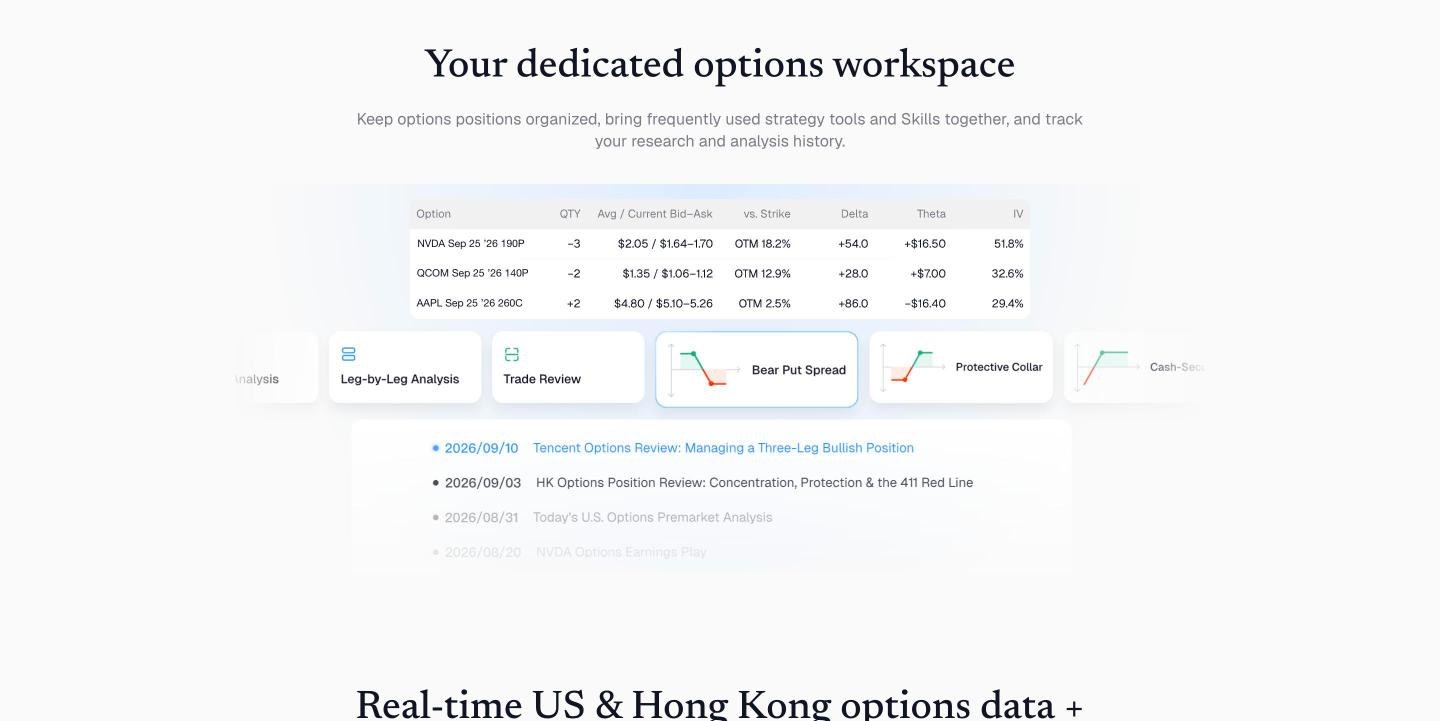
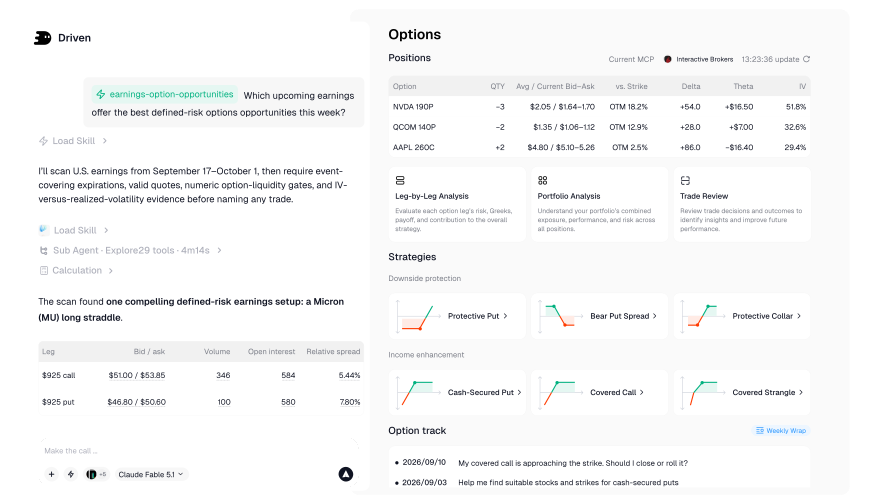
Driven: a conversation scanning earnings for options setups, next to the Options workspace with positions, strategies and tracked trades
  • 3,000+Registered users since launch
  • ~70%MCP connection rate, the most-used feature
  • 500+Outlets covered the launch, including USA Today and AP

An agent is only as useful as the data you give it. In investing, that data is your portfolio. Every feature I owned had to earn that trust, and keep the agent's work legible once it had it.

One agent, four jobs

Real-time market data turned into research, monitoring and trades, all inside one conversation.
A warmer, more consistent visual language

The product had grown feature by feature, and it showed. I benchmarked three kinds of products, took one principle from each, and turned them into the rules every module after this was built on.

OptionBid / AskDeltaIV
NVDA 190P2.05 / 1.70+54.051.8%
QCOM 140P1.35 / 1.12+28.032.6%
AAPL 260C4.80 / 5.26−16.429.4%

Structure, from fintech

Dense data with a clear hierarchy. Green and red appear only on market numbers, never on buttons or brand.

Benchmarked: Robinhood, TradingView, Surmount
Load skill · earnings-options0.4s
Get_All_PositionsInteractive Brokers
Scanning 42 option chainsRunning
Draft order for reviewNeeds you

Legibility, from AI agents

Every step the agent takes is a quiet, collapsible card with a status, so work in progress reads at a glance.

Benchmarked: ChatGPT, Claude, Manus, Cursor
Hi, UserA. Your team is ready.
Watching 6 positions · next report 8:30 AM
Scan 0DTE optionsEarnings this weekReview my risk

Warmth, from consumer AI

Investing is personal. Soft glows, a greeting by name and plain-language prompts take the chill off a finance tool.

Benchmarked: Quartr, Perplexity, Comet
Color · brand vs. signal
Ink
Brand
Surface
Up
Down
Shape · one radius scale
6 chip
8 input
12 card
20 panel
Icons · one line set (Lucide)
Deep dive 01 · MCP connectors

Connecting a brokerage account in the middle of a conversation

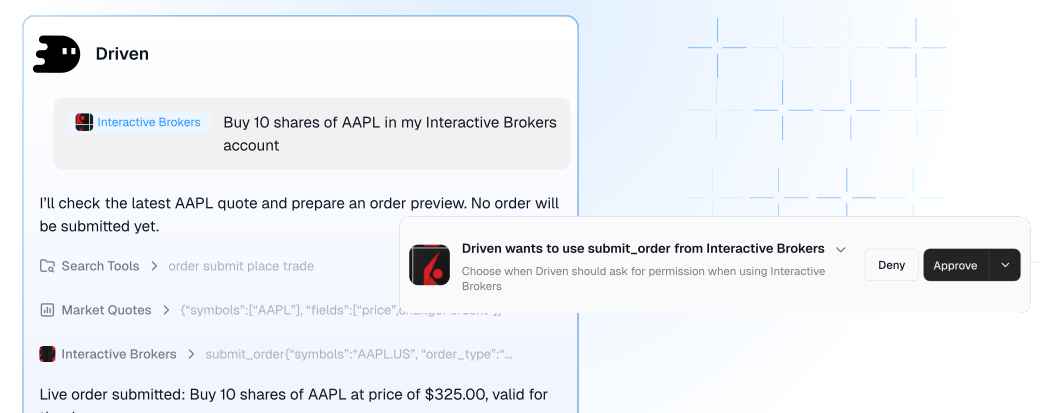
Driven asks for permission to place an order through Interactive Brokers inside the conversation, with Deny and Approve buttons
Problem
The agent's best answers need live account access, but asking for broker credentials is the scariest moment in the product.
What I did
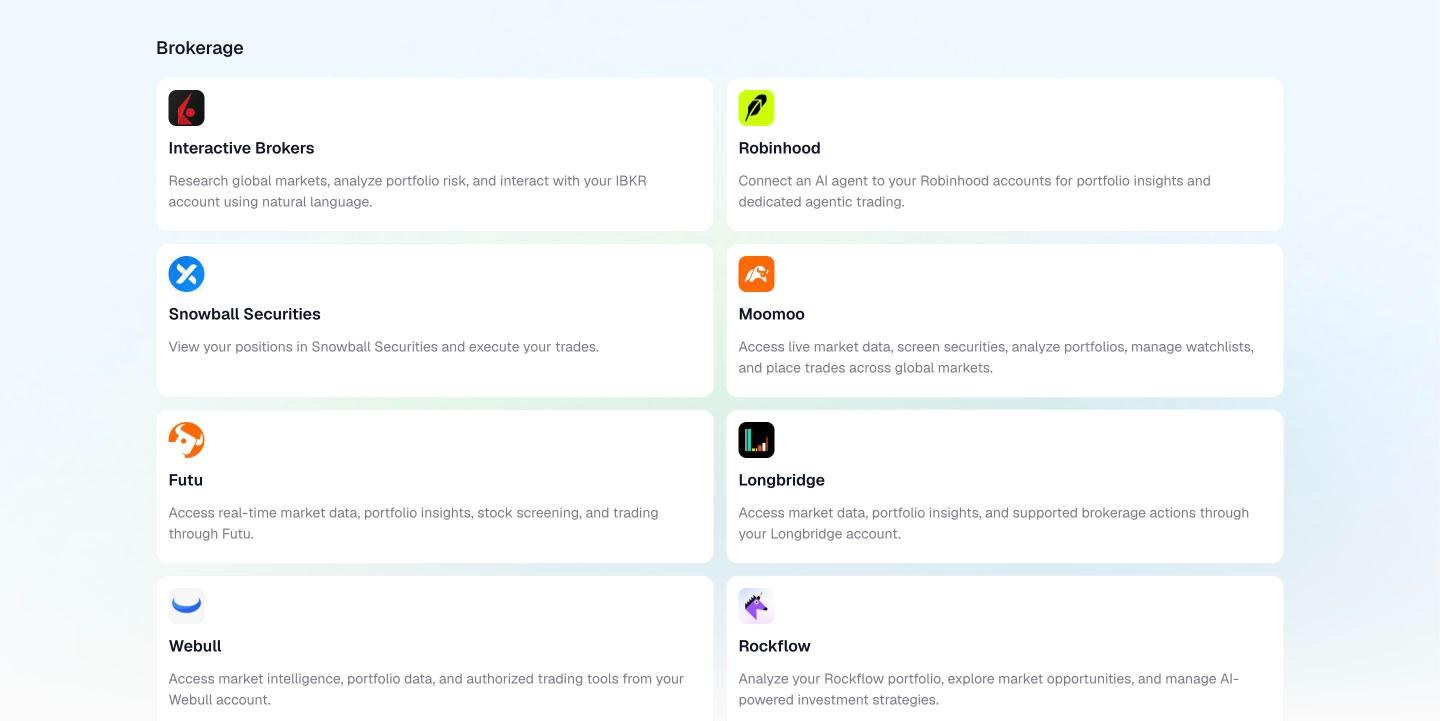
Designed the whole connector system: directory, in-chat connection, authorization, connection states and tool-call visibility.
Result
MCP became the most-used feature in Driven, with a ~70% connection rate across 16 connectors.

A user asks, "Am I too concentrated?" The agent can't answer well without the portfolio. Sending users to a settings page breaks their train of thought, and many never come back. But asking for brokerage access inside a chat can feel like a phishing prompt.

01

Ask in context, not up front

The prompt appears only when a question needs the data, inside the conversation, with one line on why. Users connect when the value is obvious.

02

One pattern for 16 connectors

Brokers, data providers and productivity tools share one card and one authorization flow, so learning one teaches all.

03

Say exactly what the agent can do

Before authorizing, users see the scope in plain words: read positions, read history, place orders only with confirmation. The agent drafts; the user signs off.

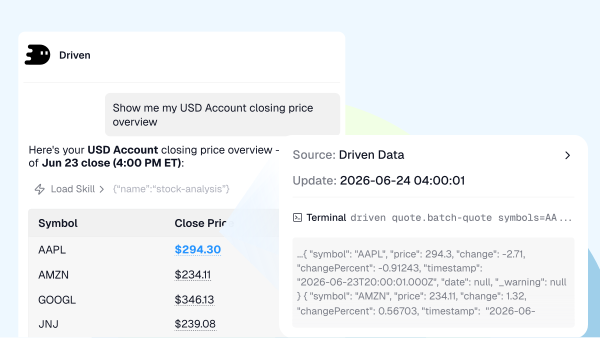
A price in the answer opens its source: Driven Data, update time, the terminal command run and the raw response
04

Make the agent's work visible

Every call shows inline as one quiet line with its parameters, and every number in the answer links back to its source: where it came from, when it updated and the raw response.

Deep dive 02 · Sharing

Share the insight, not the portfolio

"I hold 300 shares of NVDA at $480. Am I too concentrated?"

An ordinary question. It also reveals a position, a cost basis and a possible next move. Worth sending to a friend, and dangerous to send as-is.

Problem
Shared conversations carried far more than conclusions: tool parameters, reasoning and private holdings.
What I did
Share snapshots, partial sharing, a pre-share review step, and a link manager with revoke.
Result
[Fill in: shares created, sign-ups from shared pages, revoke usage]
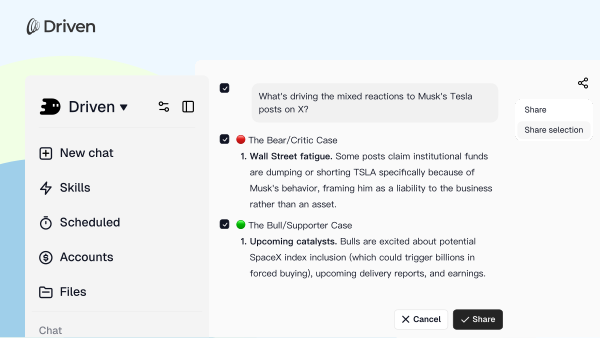
Share selection: the user ticks which messages to include, then shares only those

Left: the public page a friend opens, a fixed snapshot with a way to ask their own agent. Right: Share selection, where users tick only the messages that go public. Reasoning, system messages and tool details stay private by default.

01

A snapshot, not a live window

Sharing creates a fixed copy. Reasoning and system messages stay out.

02

Share a part, not the whole

Pick the messages to share. One analysis and the whole thread are two different actions.

03

Be honest about the limit

Credentials are filtered automatically. Holdings in text aren't, so the review step shows exactly what goes public.

04

Sharing is reversible

Every link lives on one page, with one-tap revoke.

Deep dive 03 · Agent settings

Making the agent feel like yours

An investment agent should sound like yours, invest like you and work on your schedule. I designed the settings that shape its personality, its strategy and its routines.

An agent with a name and a memory

Give it an avatar, a name and a way of talking. Its memory handbook keeps your investing preferences, so you never repeat them.

Advice in your own style

Set a strategy once, from income to momentum. Every recommendation follows it instead of a generic playbook.

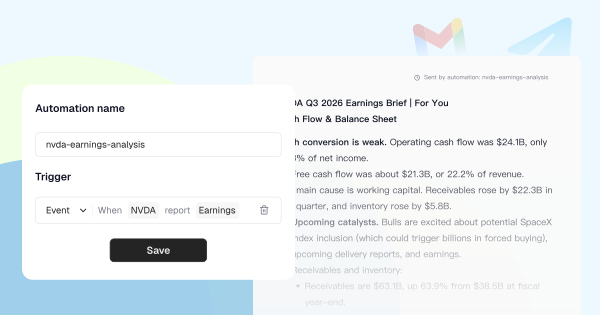
An automation triggered when NVDA reports earnings, and the earnings brief it sends

Automations you set once

Schedule the checks you need. Upcoming earnings and option expirations are ready to read before you ask.

Owned end to end

The marketing site, from first page to ongoing SEO

I designed, built and maintain driven.ai on my own: information architecture, page design, copy structure, SEO and every update since launch.

  • 01Home
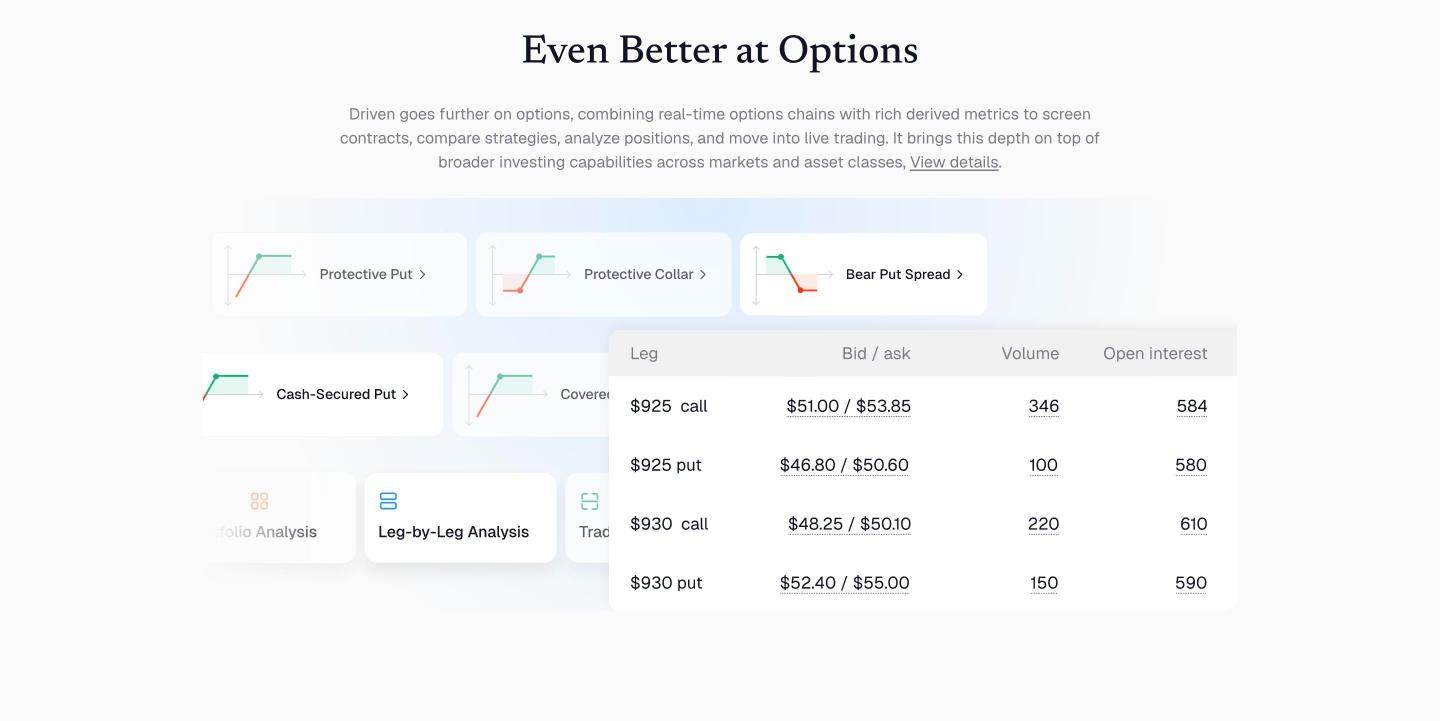
  • 02Options
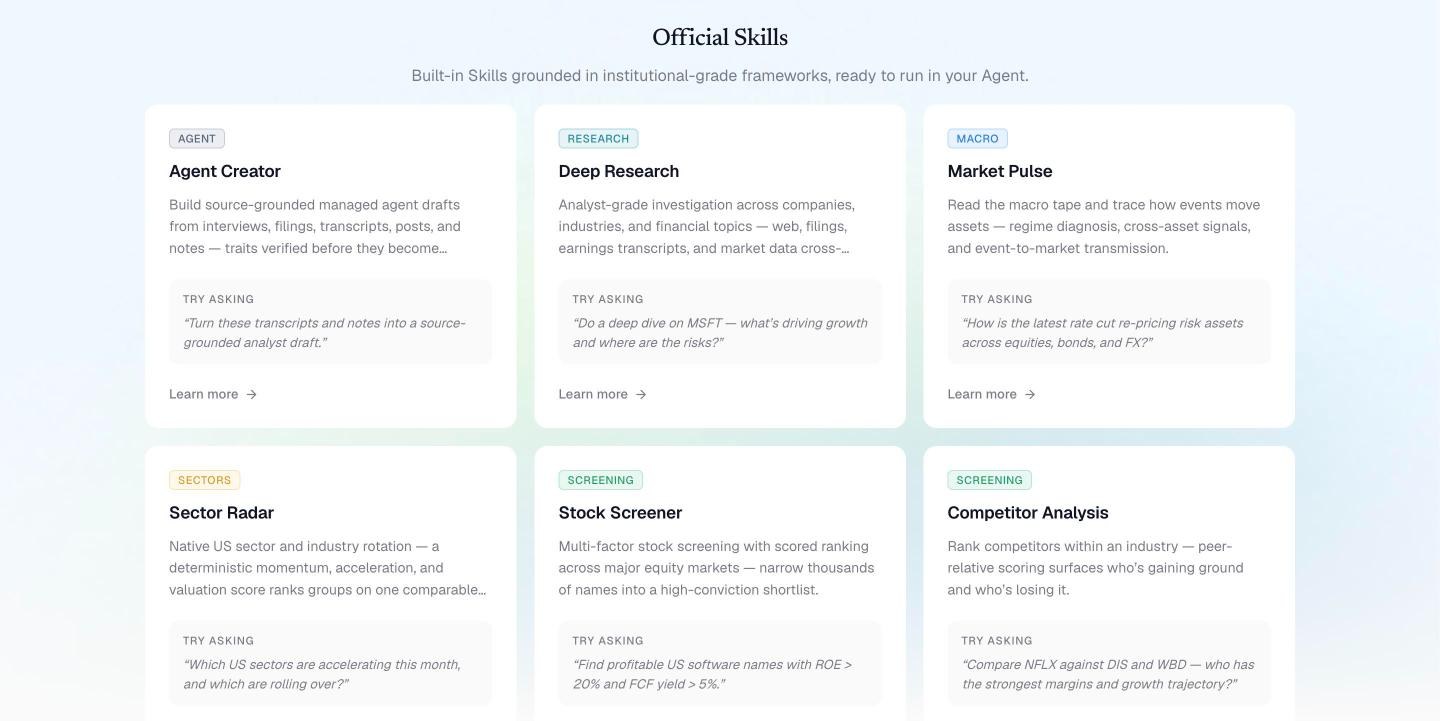
  • 03Skills
  • 04Connectors
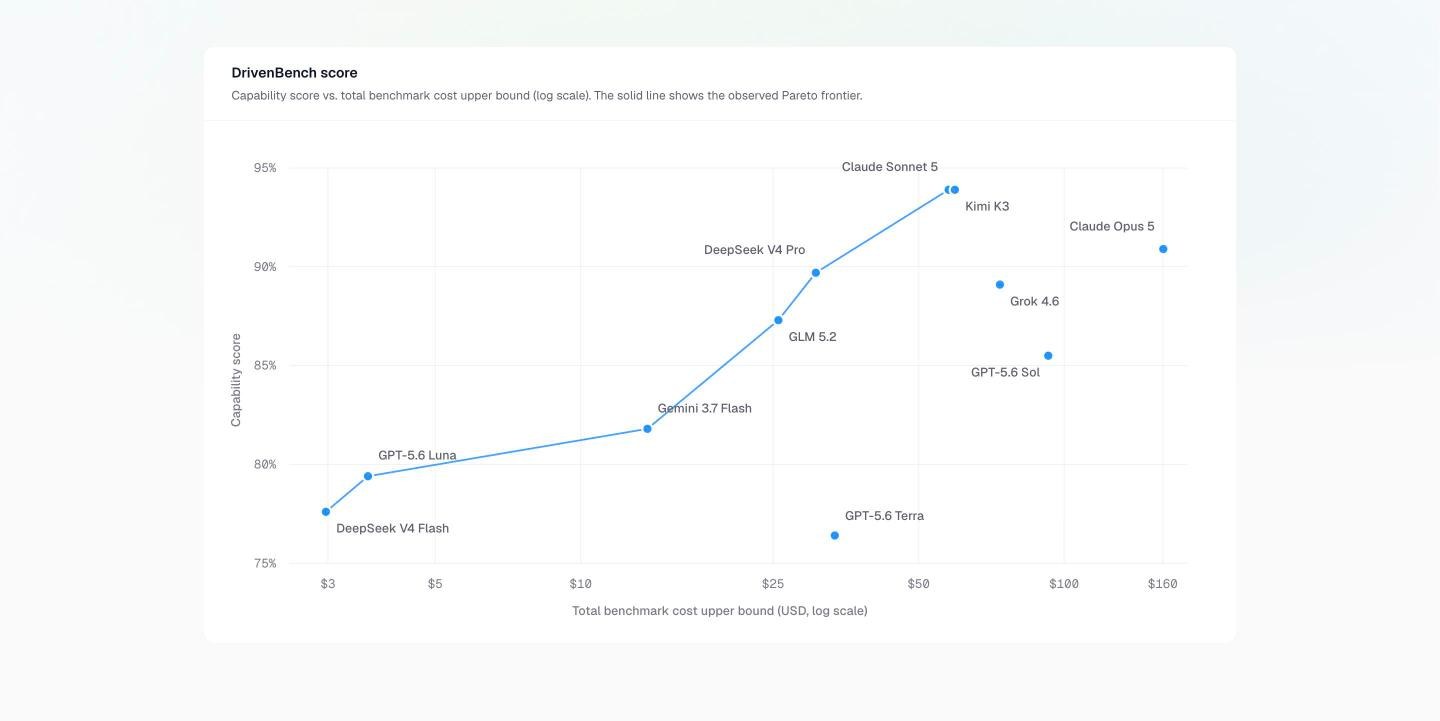
  • 05DrivenBench
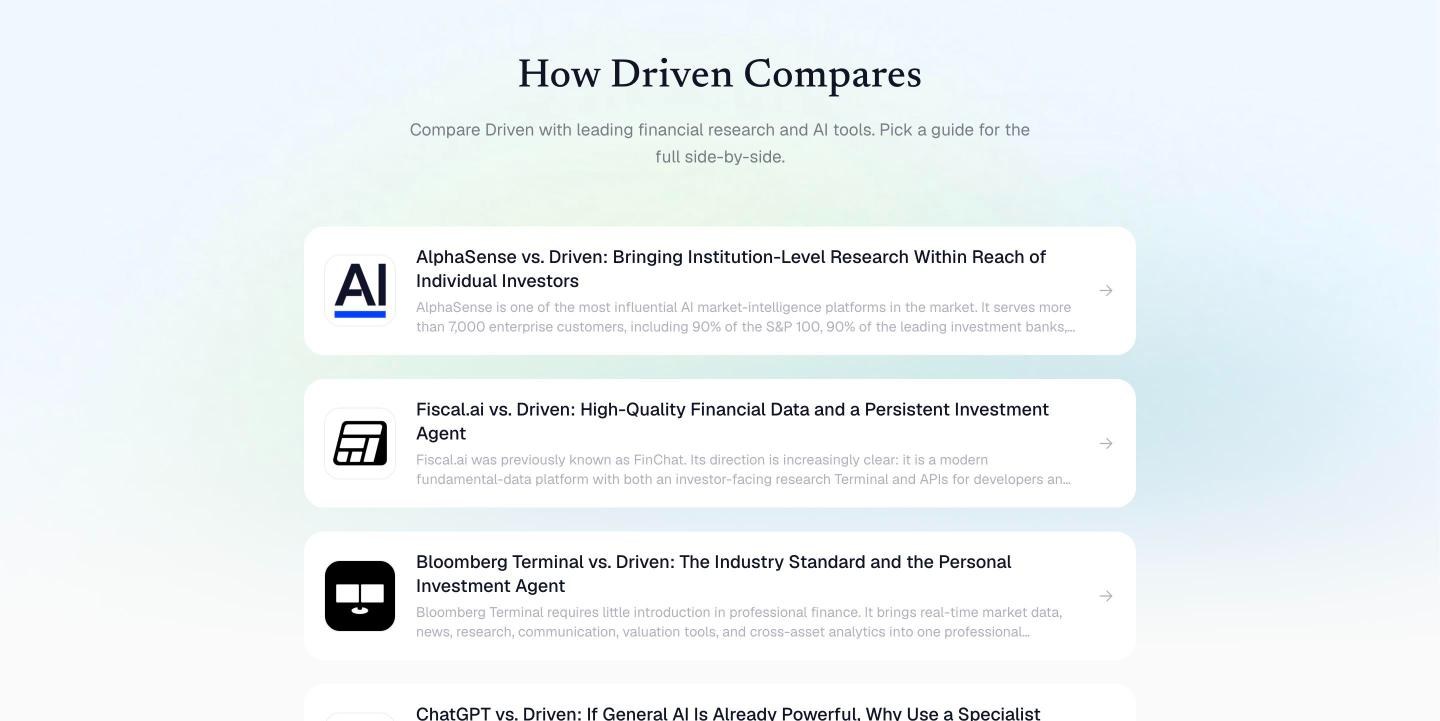
  • 06Comparisons
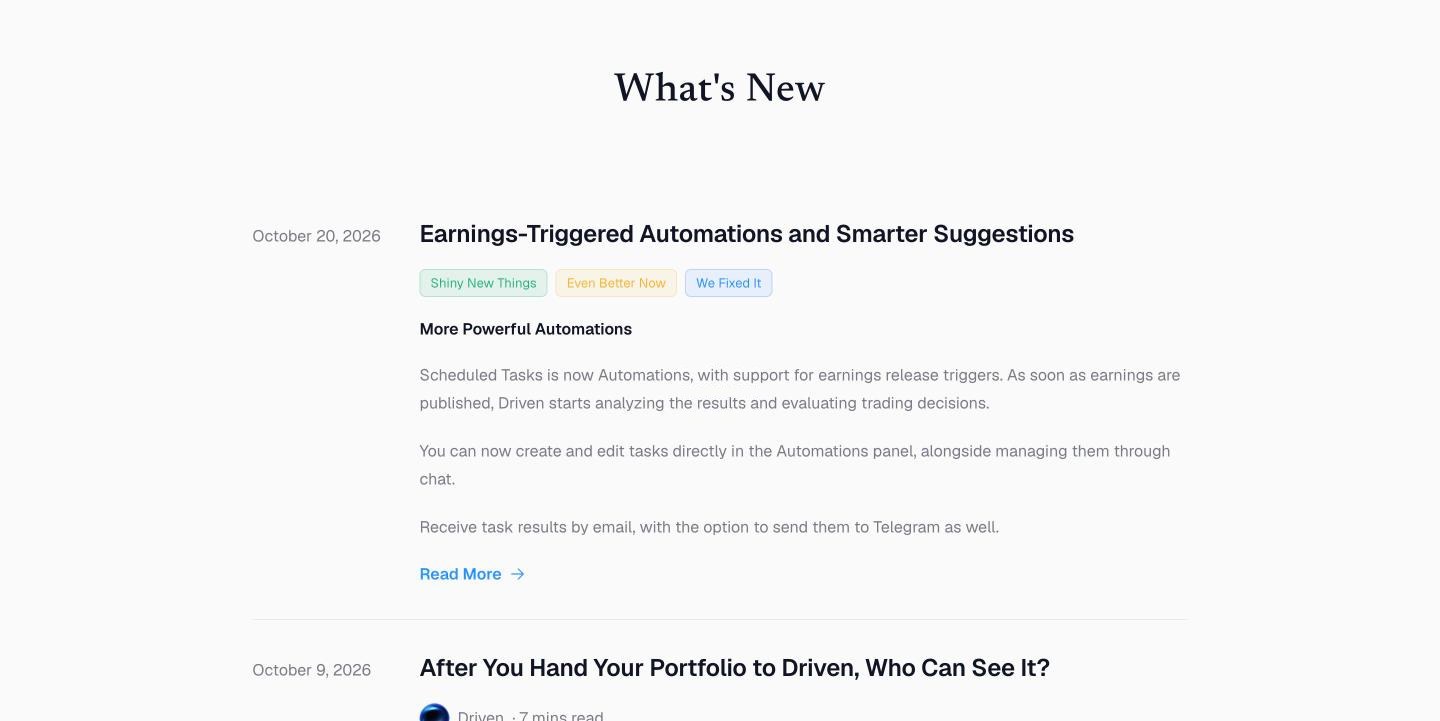
  • 07What's New

Pages built to rank

Templated pages for Options, Skills, Connectors and model comparisons, each aimed at what investors actually search.

Keeps pace with the product

A What's New log and the DrivenBench leaderboard turn product updates into fresh, indexable content.

Ready for new markets

A Chinese-language site rebuilt around four product values, with looping demos in place of static screenshots.

What shipped, and what it moved

Driven overall
3,000+
Registered users since launch
1,200+
Weekly active users
38%
Week-4 retention
Features I designed
~70%
MCP connection rate, the most-used feature
16
Connectors on one shared design pattern
2.4×
Organic site traffic after the SEO rebuild

What I'd carry forward

Trust is a design material.

The moments that matter most are where users hand something over: an account, a screenshot, a link. Designing those carefully did more for adoption than any new feature.

Legibility beats autonomy.

Users accepted more automation once they could see each tool call. Next, I'd add a per-session summary of everything the agent read and did.

One person, many surfaces.

Owning both product and marketing site meant the story users saw before signing up matched what they found inside.